 HaBeer
The Boy Who Led His Father Through the Street
On a maggid who stopped in the street, on a boy nobody saw, and on what happens when you bring someone home instead of only giving to them.

Friday, 12 Cheshvan 5787
From "MiShulchan Shlomo" · Issue 301 · Parshat Lech Lecha · 🕯️ Shabbat candle-lighting and end times

Inspired by the holy writings "MiShulchan Shlomo" (Issue 301, Parshat Lech Lecha), by our master and teacher the Yanuka, the Gaon Rabbi Shlomo Yehuda shlit"a, a hidden mystery of our generation.
There are people who pass us every day, and we don't see them. Not out of malice, simply because they don't ask. They don't knock on the door and they don't stand there holding a sign. They keep walking, with whatever they're missing, quietly.
There's a story that belongs at the Shabbat table, about one man who did see.
🚶 In the street, on an ordinary morning
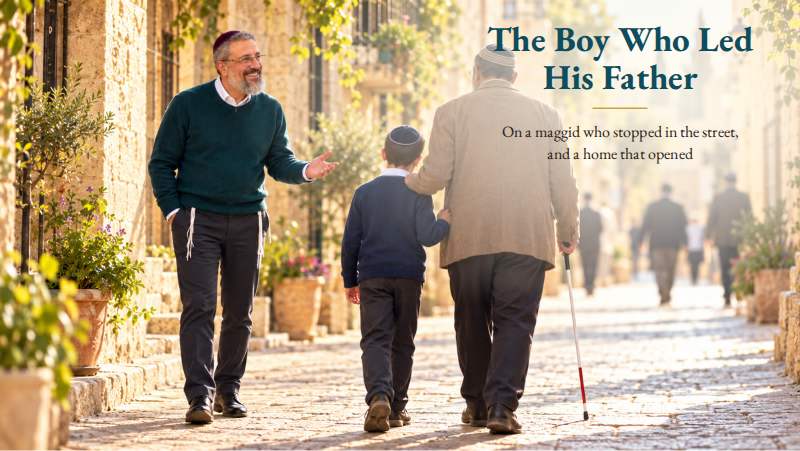
It is told that the Maggid of Dubno, Rabbi Yaakov Kranz, was once walking in the street and saw a boy leading a blind man. From their clothes it was clear they were very poor.
The Maggid stopped, asked how they were, and asked where they were going. The boy answered that the blind man was his father. His mother had passed away a few years earlier, and now he was leading his father to the soup kitchen, the place where meals were handed out to the poor.
With two questions the Maggid understood everything. Their financial situation, and what lay beneath it: a boy who had grown up too early, and a father who depended on his young son.
And he didn't give them a coin. He invited them to his home.
🏠 From one meal to a home
At the Maggid's home they were given a good, filling meal, far more than they would have received at the soup kitchen. And in the middle of the meal the Maggid asked them: perhaps you'll live here, with me, permanently? I'll take care of everything you need, and I'll raise the boy like a son.
They agreed. And so they moved into his home.
The Maggid sent the boy to study with a teacher, like every boy his age. A few years later the father passed away too, and the boy remained in the Maggid's home like an only son. When he grew up, the Maggid sent him to yeshiva and watched over his learning. The boy was diligent and persistent, and became a prodigy among his peers. And when the time came, the Maggid married him to a fine bride.
The boy's name grew more and more famous, until he was appointed rabbi of the city of Brody. This was Rabbi Shlomo Kluger, whose Torah is studied to this day.
And all of it began with one man who stopped in the street and asked, "Where are you going?"
👀 Seeing, before helping
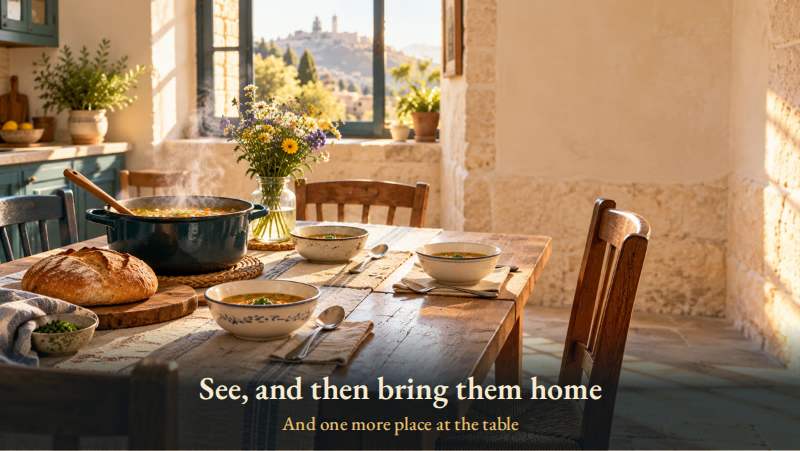
There are three moments in this story, and it's worth separating them.
The first moment is seeing. The street was full of people, and the boy and his father passed through it every day on their way to the soup kitchen. But the Maggid was the one who stopped. He didn't wait to be asked.
The second moment is understanding. He asked, he listened, and he understood not only what they lacked right now, but what their situation truly was. A boy who leads his father every day is not just a hungry boy.
And the third moment is giving more than was asked. They were on their way to a meal. They received a home.
Most of us get stuck at the first moment. Not because we don't care, but because we're in a hurry, and because the one who truly needs help usually doesn't look like someone who needs it.
🤲 Those who groan in silence
This story is told to teach one thing: every person has a duty to turn their eyes and heart to the needs of those around them. Because there are people who groan in their want, and have no one to save them.
Notice the word "groan". It isn't a scream. It's a quiet sigh, the kind you can barely hear. Someone who screams, someone will eventually hear. Someone who groans quietly, sometimes no one ever hears.
And the reason they're quiet is usually not a lack of need. It's shame. It's hard to ask. It's hard to admit that something is missing. The boy in the story didn't ask the Maggid for anything. He only answered a question.
And so whoever waits to be asked will miss exactly the person who needs it most. Great kindness begins with a question, not with a request.
🪙 A coin or a home
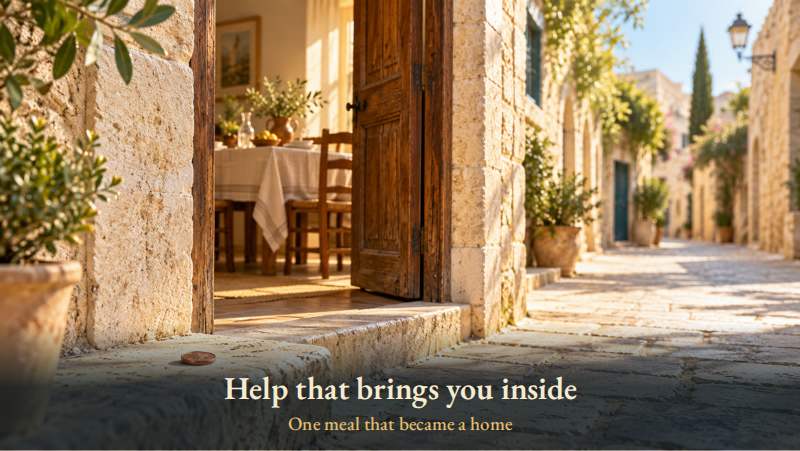
And there's one more thing the Maggid teaches us. There are two kinds of help.
There's the help of a coin. You give, you feel good, and you keep walking. It matters, and it's good. But it ends the moment you've given.
And there's the help of a home. You bring the person inside, to the table, into your life. That's a commitment. It doesn't end with one meal.
Not everyone can open their home to a boy and his father. But between a coin and a home there are many levels. A standing invitation to Shabbat dinner. A phone call once a week to someone who lives alone. A regular ride to the doctor. Each of these is a small room in the home.
🌿 From Avraham, who sat at the entrance of the tent
It's no coincidence that this story comes precisely in the week of Parshat Lech Lecha. Avraham Avinu is the root of the trait of kindness. And in next week's parsha we see him sitting at the entrance of the tent, in the heat of the day, waiting for guests. He didn't wait for them to knock. He ran to them.
Avraham's kindness isn't only giving. It's attention. An eye that looks for whoever is passing on the road, and a heart that understands what they need even before they say it.
And the Maggid of Dubno walked the same path. He didn't ask himself whether this was his job, or whether someone else would take care of it. He saw a boy and a father, and opened his home.
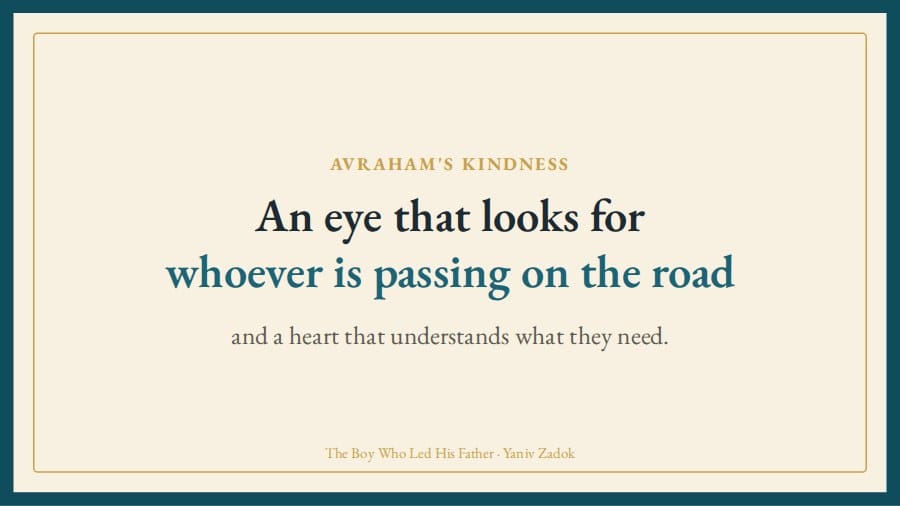
This week, see one person who passes you every day, and ask them one real question. The elderly neighbor, the cashier at the supermarket, the child who always sits alone at recess. You don't need to solve their life. It's enough to stop, ask "How are you?", and wait for the answer.
🕯️ For the Shabbat table
You can tell this story tonight to your children, and ask them a simple question: who do you think this boy would be in your class? Who passes by every day, and nobody notices them?
And sometimes the answer is surprising. Sometimes a child says a name, and we discover they saw long ago what we didn't.
The Maggid didn't know he was raising a great Torah scholar. He only knew there was a boy who needed a home. We never have any idea what will grow from the person we bring home.
Shabbat shalom u'mevorach 🌹
🕯️ Shabbat times · Parshat Lech Lecha 5787
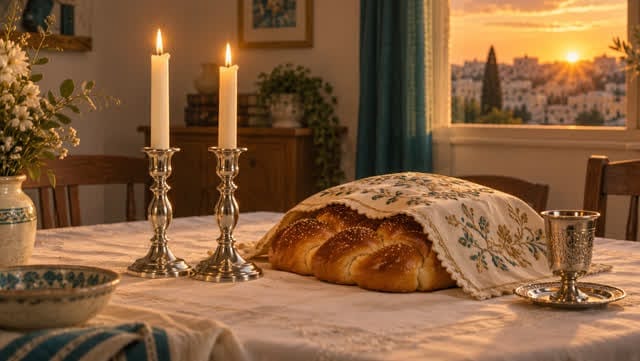 🕯️ Candle-lighting
| Jerusalem | 17:22 |
| Bnei Brak | 17:40 |
| Haifa | 17:41 |
| Be'er Sheva | 17:42 |
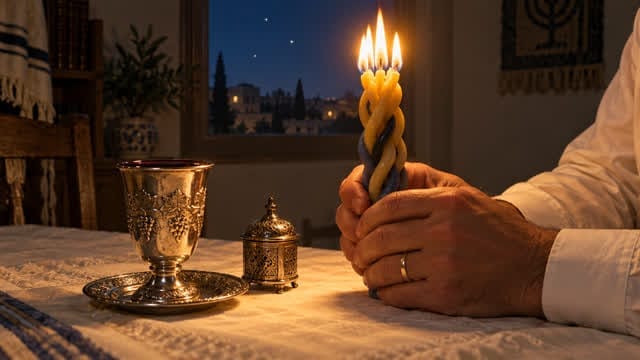 🍷 Shabbat ends · Havdalah
| Shabbat ends | Rabbeinu Tam | |
|---|---|---|
| Jerusalem | 18:32 | 19:11 |
| Bnei Brak | 18:30 | 19:07 |
| Haifa | 18:31 | 19:08 |
| Be'er Sheva | 18:32 | 19:10 |
Times taken from Issue 301 of MiShulchan Shlomo.
✨ From the Great Light to the Small Deed
I was stirred to gather and draw out upright, practical ways of living from the holy writings "MiShulchan Shlomo," by our master and teacher the Yanuka, the Gaon Rabbi Shlomo Yehuda shlit"a, a hidden mystery of our generation.
Our Rabbi is great beyond measure, and we cannot grasp his greatness. And it is exactly here, in my eyes, that a great wonder lies.
From an immense depth, from the secrets of the Torah and the heights of heaven, he reveals to us the glory of the Kingship of Hashem precisely through the small, simple things of life.
One small practice, and then another small practice. One deed you can do today, and another you can add tomorrow.
What seems far away, lofty and complex to us, our Rabbi brings close, breaks into small steps, and gently leads us to the service of Hashem within everyday life.
Here, in the kingdom of the earth. At home, in speech, in thought, in how we treat others, and in every simple deed.
And those small practices, whose greatness we sometimes barely notice, act and reach all the way to the Life of all worlds.
And from this awakening came the desire to write: each time to take one point from our Rabbi's words, to reflect on it, and to try to bring it down from learning into action.
Not to grasp the depth of his words, but to begin walking in their light.
One small step, and then another small step.
of our master and teacher the Yanuka, the Gaon
Rabbi Shlomo Yehuda shlit"a
Issue 301 · Parshat Lech Lecha 5787 · 4 pages, in Hebrew, ready to print
Download and print (PDF) ⬇️Send it to someone who always sees the person standing on the side.
Share on WhatsApp 💬 💬 Send me a WhatsApp message · or visit my digital business card